If you're a biology major staring down graduation and feeling a low hum of panic, you're not alone. Not even close.
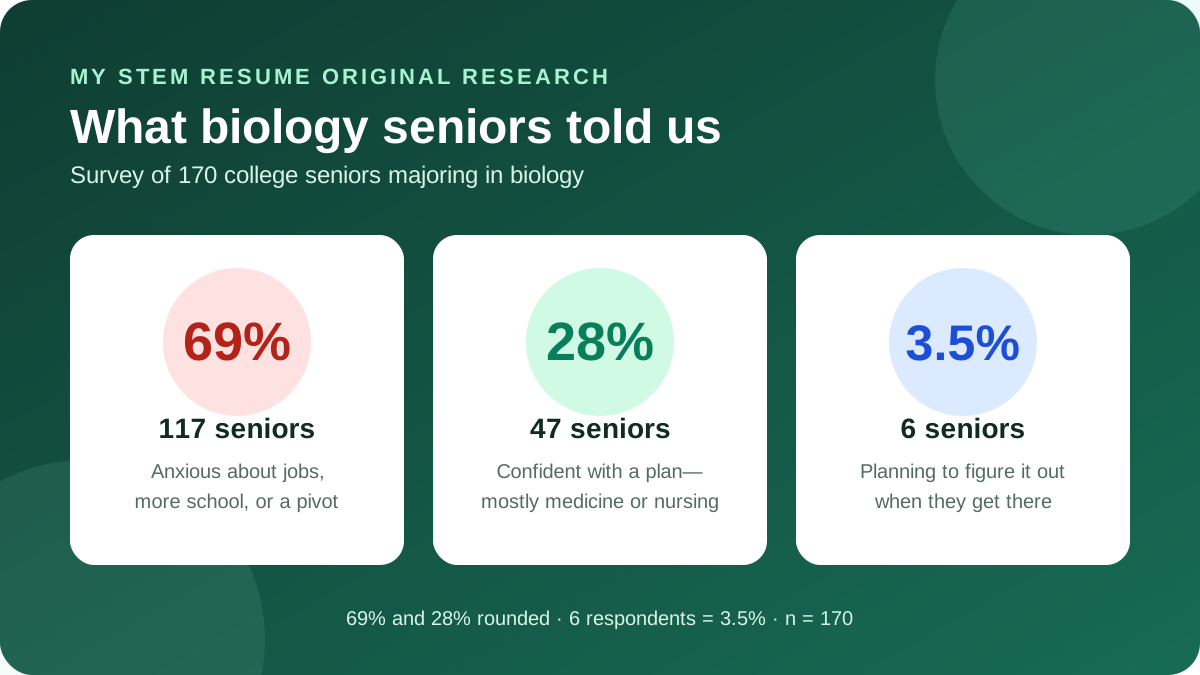
We surveyed 170 college seniors majoring in biology to understand how they felt about life after graduation. The results put a number on something a lot of bio majors feel but rarely say out loud: 117 of them—nearly 7 in 10—said they were scared they'd end up unemployed, or that they'd need a graduate degree or a different major entirely just to be employable in today's job market.
That's the headline. But it's not the whole story.
The Data: Three Very Different Groups of Seniors
- 117 students (69%) reported real anxiety about the job market—worried they'd need an advanced degree, a career pivot, or would simply struggle to find work with a biology degree alone.
- 47 students (28%) said they knew exactly what they wanted to do and were already taking the necessary steps. For most of this group, “the plan” meant medical school or nursing school.
- 6 students (3.5%) said they would figure it out when they got there.
That's the actual problem. It is not that biology majors lack options. It is that most seniors have only ever been shown one.
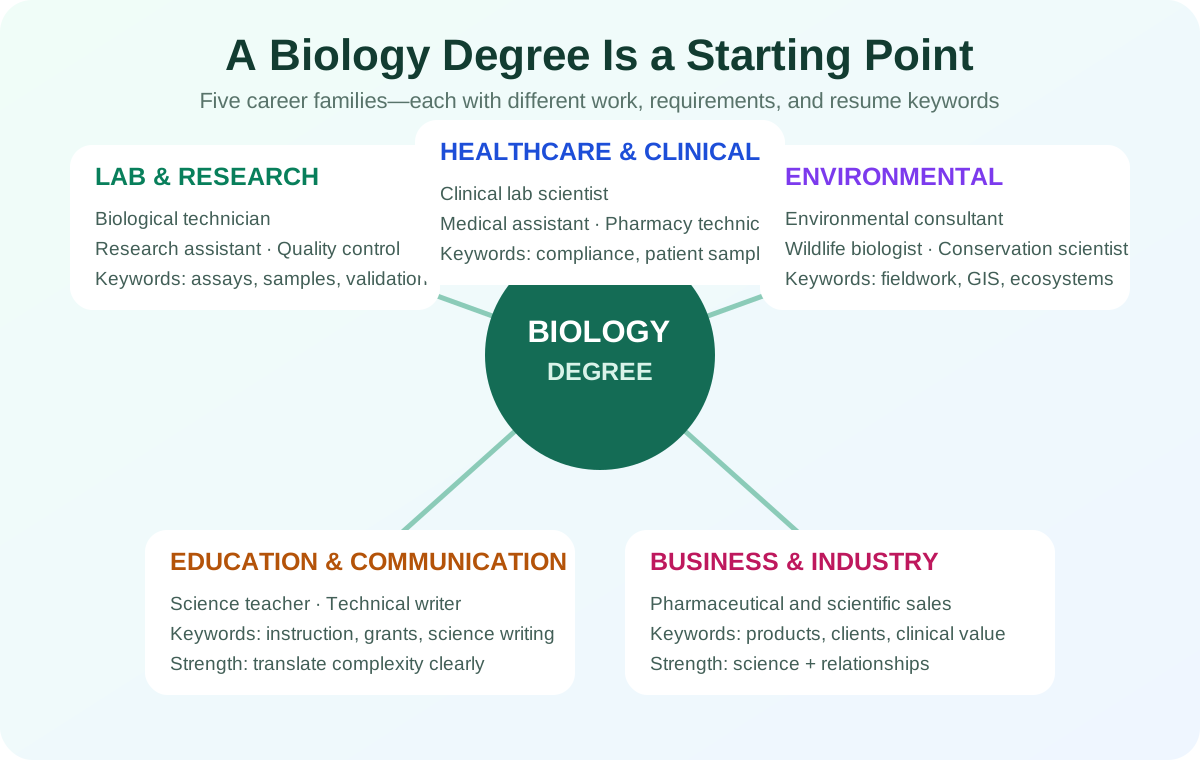
The Reality: A Biology Degree Opens More Doors Than “Doctor or Bust”
Medicine, dentistry, and pharmacy are legitimate, respected paths—and if that's your goal, a biology degree is the right foundation. But they are not the only outcome of four years spent studying life science. Treating them as the only “real” outcome helps drive the anxiety reflected in our survey.
About the labor-market data: Pay and growth figures below are based on the U.S. Bureau of Labor Statistics Occupational Outlook Handbook, using May 2024 wage data and 2024–2034 projections supplied for this research. “Growth” reflects projected employment change over that decade; 3% is approximately the average across all occupations. Review current details at the BLS Occupational Outlook Handbook.
Lab & Research Roles
Biological Technician
Run tests, prepare samples, and maintain calibrated lab equipment.
$52,000 median pay · 3% growth
Research Assistant
Support clinical trials or experiments in university, hospital, or private-industry labs. Entry pay commonly varies by setting; advancement can lead toward medical scientist work.
Medical scientists: $100,590 median · 9% growth
Quality Control Technician
Test food, pharmaceutical, and manufactured products against safety and legal standards.
$47,460 median pay · 69,900 openings/year from turnover
Healthcare & Clinical Roles Without Medical School
Healthcare Support
Pharmacy technician, medical assistant, and physical therapy aide roles apply human-science knowledge directly with patients.
$34,520–$44,200 median · 6%–16% growth
Clinical Lab Scientist
Process patient samples in hospital laboratories to support diagnosis. State licensing may be required.
$61,890 median pay · 2% growth
Advanced Healthcare
Biology can launch further study in nursing, dentistry, pharmacy, medicine, or physician assistant programs.
Physician assistants: 20% projected growth
Environmental & Conservation Roles
Environmental Consultant
Test soil and water, study ecosystems, and help organizations meet environmental regulations.
$80,060 median pay · 4% growth
Wildlife Biologist
Track animal populations, behavior, habitat health, and field-research findings.
$72,860 median pay · 2% growth
Conservation Scientist
Manage and protect forests, parks, rangelands, and natural resources.
$67,950 median pay · 3% growth
Education, Communication & Industry Roles
Science Teacher
Teach life science in middle or high school after meeting state licensing requirements.
$64,580 median pay · 66,200 openings/year
Technical Writer
Translate scientific information into manuals, medical content, reports, or grant proposals.
$91,670 median pay · 1% growth
Pharmaceutical Sales
Explain technical and scientific products to healthcare organizations while building commercial relationships.
Technical/scientific sales: $100,070 median pay
Why This Matters More Than a List of Job Titles
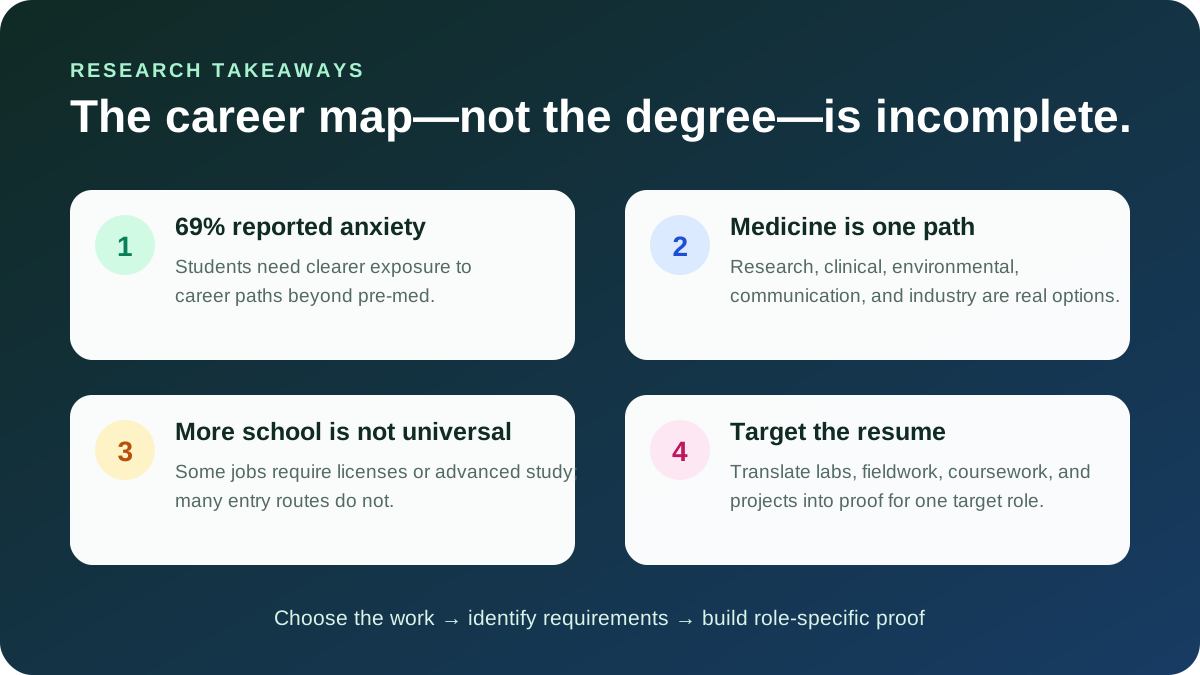
The point is not merely “here are twelve jobs.” It is this: the anxiety we measured may be less about the job market being impossible and more about the career map being incomplete. When “become a doctor” is the only path students see, every other outcome can look like failure—even when it is a legitimate, stable career.
If you're one of the 117 seniors in our survey who is worried about what comes next, the honest answer is that you have more options than you may have been told. Several roles above exceed the reported U.S. median wage for all occupations, even without a graduate degree. Some require more school; many do not.
Your Biology Resume Has to Match the Path
The work now is not finding a path—it is deciding which path fits the daily work you want. Then build a resume that speaks directly to it. A biology resume targeting wildlife conservation should emphasize field methods, ecology, GIS, and data collection. A resume targeting a clinical lab should emphasize assays, instrumentation, quality procedures, safety, and sample processing.
- Choose a target: lab, clinical, environmental, communication, education, or commercial work.
- Extract proof: techniques, instruments, protocols, datasets, projects, coursework, certifications, and outcomes.
- Use role-specific keywords: mirror accurate language from the job description without exaggerating.
- Show results: quantify sample volume, turnaround time, accuracy, documentation, participation, or project outcomes where possible.
Turn your biology degree into a targeted resume
Explore biology-specific resume guidance, then build an ATS-friendly resume around the career path you actually want.
This research was conducted by My STEM Resume, a career platform for STEM students, recent graduates, and professionals. Individual pay varies by employer, location, experience, and industry; figures are national medians, not guarantees.